

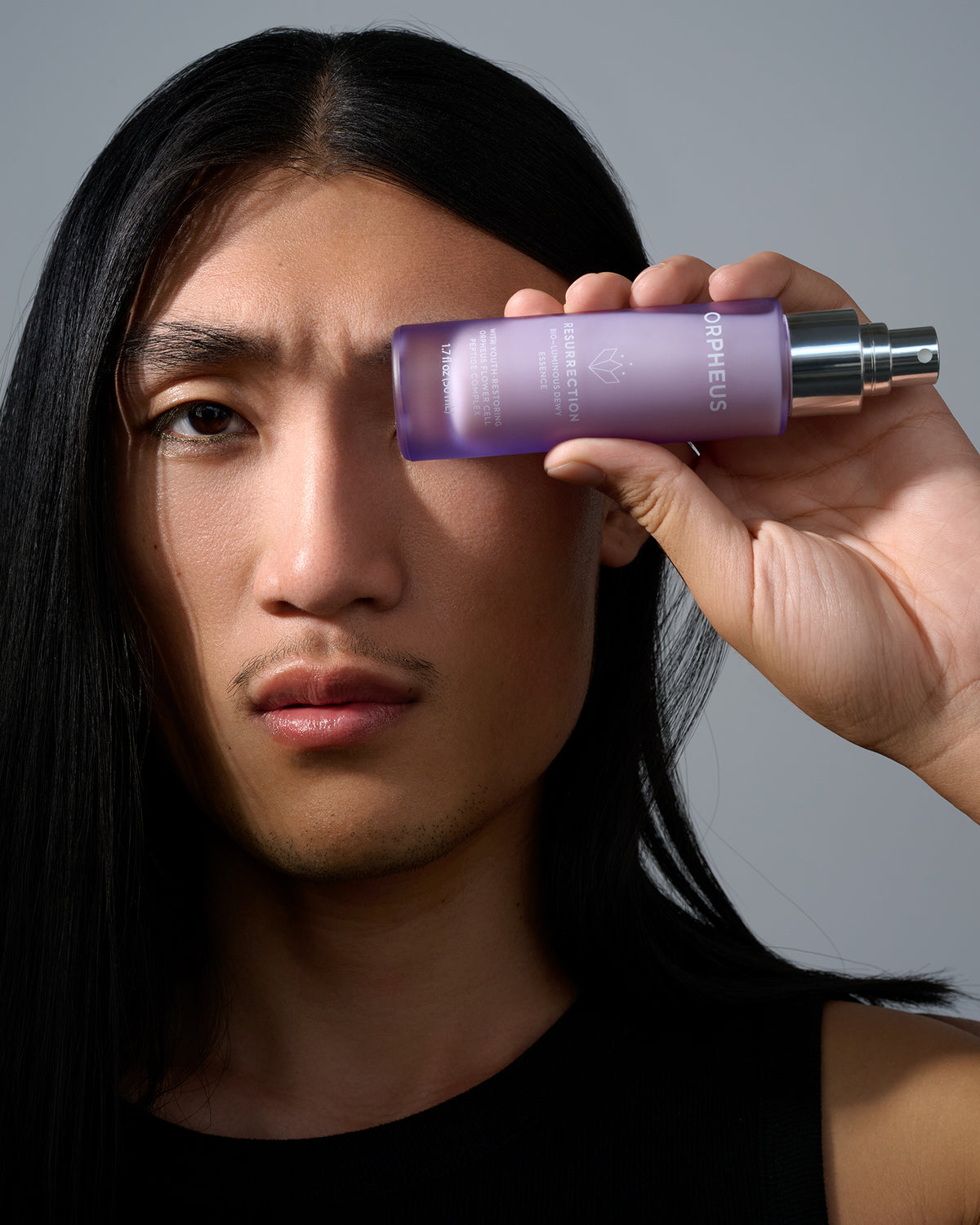


Gentle Exfoliation Without the Acid Hangover
There's a sting most people have decided is the point. The acid goes on, the face tightens, something low and electric runs across the cheekbones, and the whole thing gets filed under working. Tomorrow there's a flush that reads as glow if the light is generous. By Thursday the skin is tight, reactive and quietly furious.
That sting was never proof of anything except damage. Gentle exfoliation does the same job without the hangover, and the only reason it sounds like a downgrade is that the category spent a decade selling intensity as efficacy.
The Acid Arms Race Sold You Damage as Progress
Exfoliation used to mean a scrub. Then it meant glycolic. Then it meant glycolic at 10%, then 15%, then a peel pad you were told to use nightly, stacked under a retinoid, on skin that had never asked for any of it.
Percentages became a status symbol. Strength became shorthand for results. The problem is that skin doesn't reward escalation, it just absorbs it until it can't. Repeated high-strength acid use strips the lipids holding the barrier together, and research links that disruption to inflammation, sensitivity and slower repair. Skin that's constantly recovering never gets to the part where it looks good.
The redness you've been reading as radiance is inflammation with better PR.
What Gentle Exfoliation Actually Does at the Cellular Level
Your skin already sheds itself. Cells generate at the base of the epidermis, migrate upward over roughly four weeks, and flake off without you touching them. That cycle slows with stress, late nights, pollution and time, which is when dead cells linger, light stops reflecting cleanly and everything looks flat.
Exfoliation exists to nudge that cycle back to pace. Nudge is the operative word. Turnover doesn't need force, it needs a signal, and the difference between a signal and an injury is dose, frequency and the molecule doing the work.
Gentle exfoliation means clearing the surface without breaching the barrier underneath. Skin stays intact, hydration stays in, and the glow that follows is structural rather than inflammatory. It also survives contact with your actual life, which a peel protocol rarely does. If your barrier is already compromised, start with our barrier-first guide to healing skincare before you resurface anything.
The Fruit Cell That Resurfaces Without the Sting
Caviar Lime Pearl Extract comes from a finger lime, a native Australian citrus whose flesh separates into tiny pearls that burst rather than crush. The extract carries naturally occurring fruit acids in a delivery system that releases them gradually instead of dumping them onto the skin at once.
That pacing is the whole mechanism. Gradual release means turnover accelerates while pH stays inside the range your barrier enzymes need to function. You get smoother texture, cleaner light reflection and faster cell renewal, with zero irritation on the way through. It's the difference between a door held open and a door kicked in.
Skin doesn't need to be stripped to be resurfaced. It needs to be persuaded.
Exfoliation That Happens While You Cleanse
Which brings the argument somewhere unexpected. The most sustainable place for gentle exfoliation isn't a treatment step at all, it's the thirty seconds you already spend cleansing.
The Resurrection Serum Slip Cleanser was built around that idea. Caviar Lime Pearl Extract handles turnover, the serum-slip texture removes makeup and pollution without stripping, and the Orpheus Flower Cell Peptide Complex® works underneath it, a bioengineered blend of botanical stem cells, antioxidants and plant tripeptides drawn from a flower that revives from total dehydration with one drop of water. It's award-winning and it delivers zero irritation, which in this category still counts as a radical position.
One step, every night, no recovery window. The routine gets shorter and the skin gets better, which is the trade the acid arms race never offered you. Our three-product ritual shows where it sits in the rest of the lineup.
Stop asking your skin to earn its glow through punishment. It was always going to give it up faster to something patient.
Ready to retire the peel pads? Shop the cleanser or browse the full ORPHEUS range and rebuild the routine around it.
Frequently Asked Questions
How often should you exfoliate without damaging your skin?
Daily is fine when the method is gentle, which usually means an enzyme or fruit-derived exfoliant built into a cleanser. High-strength acids and physical scrubs are a different question and should stay at once or twice weekly at most. Frequency matters less than intensity.
What is the gentlest way to exfoliate sensitive skin?
Fruit-derived exfoliants with gradual release, applied during cleansing rather than left on the skin. Caviar Lime Pearl Extract works this way, accelerating turnover while keeping skin's pH inside its functional range. Skip physical scrubs entirely, since sensitised skin reacts to abrasion faster than to acids.
Does gentle exfoliation actually work as well as chemical peels?
For texture, dullness and clogged pores, yes, and it works without downtime or the rebound sensitivity peels cause. Peels have their place for deeper concerns, but most people are treating a maintenance problem with an intervention. Consistency beats intensity on a four-week turnover cycle.
How do you know if you've been over-exfoliating?
Tightness after cleansing, stinging from products that never stung, persistent redness and new breakouts in unfamiliar places. Skin that feels dry no matter how much you hydrate is the clearest signal. Pull all exfoliants for two weeks and read how to rebuild a damaged barrier.
Can you exfoliate and use retinol at the same time?
Not on the same night at full strength. Retinoids already accelerate turnover, so stacking acids on top pushes skin past stimulus into injury. A gentle cleanser-based exfoliant is the exception, since it clears the surface without competing with the retinoid's mechanism.
Read more

Twelve steps, eleven bottles, and a face that still won't cooperate. The glass skin trend mutated into a dare, and your barrier paid for it. So here's what all that over-layering actually does unde...
Your cabinet is the real carbon cost, not the label that says clean. The most sustainable skincare move this year isn't buying better. It's buying less, and finishing it.