




Overdosing Glass Skin: The Trend That's Wrecking Your Barrier
Twelve steps. Eleven bottles. A bathroom counter that looks like a chemistry set, and a face that still won't cooperate. Somewhere between the essence, the ampoule, the second essence and the sleeping mask, the promise curdled. You went looking for translucence and came back with a rash.
Glass skin was never meant to be a stress test. The internet turned a finish into a formula, then turned the formula into a dare. More layers. More actives. More often. That is what overdosing glass skin looks like, and your barrier is filing a complaint.
The Trend Mutated Somewhere Around Layer Six
Glass skin started as a description. Skin so hydrated it reflected light, poreless and lit from underneath. Then it became a checklist, and the checklist grew teeth.
The maximalist version now circulating asks you to exfoliate, tone, essence, serum, ampoule, emulsion, cream and occlusive, twice a day, often with acids stacked underneath all of it. Every step brings new preservatives, new pH shifts, new opportunities for irritation. Ten formulas competing for the same real estate don't compound. They collide.
The glow on your feed is lighting, filters and a beauty editor's genetics. The redness in your mirror is what the protocol actually produces. If you've already crossed that line, our barrier-first guide to healing skincare covers the repair work.
What Overdosing Glass Skin Does Underneath
Over-exfoliation strips the lipids holding your barrier together, and repeated disruption drives inflammation, sensitivity and impaired repair. Stacked actives push your skin's pH outside its functional range, which handicaps the enzymes that rebuild it. Heavy occlusives seal the surface and trap the irritation you just applied.
Then the irony arrives. A wrecked barrier cannot hold water, so the shine you're chasing, the kind that comes from skin saturated at every level, becomes structurally impossible. You didn't overshoot the goal. You dismantled the mechanism that delivers it.
Late nights make it worse. Cortisol degrades the barrier on its own schedule, which is why a serum built for stressed skin belongs in the conversation long before a tenth layer does.
The dewiest skin in the room usually belongs to whoever's doing the least.
Skinimalism Is Precision, Not Restraint
Cutting your routine isn't a compromise or a wellness aesthetic. It's what happens when you stop treating skincare as accumulation and start treating it as engineering.
Fewer formulas mean fewer variables, fewer irritants, and clinically dosed actives that get to work without four other products arguing with them. Hydration that reaches every layer at once outperforms three humectants applied in sequence. Gentle cellular turnover, the kind Caviar Lime Pearl Extract delivers, resurfaces without the collateral damage of a physical scrub. Our guide to building a three-product routine maps the whole thing out.
That's the version of glass skin worth having. Earned from underneath, not lacquered on top.
The One-Bottle Answer
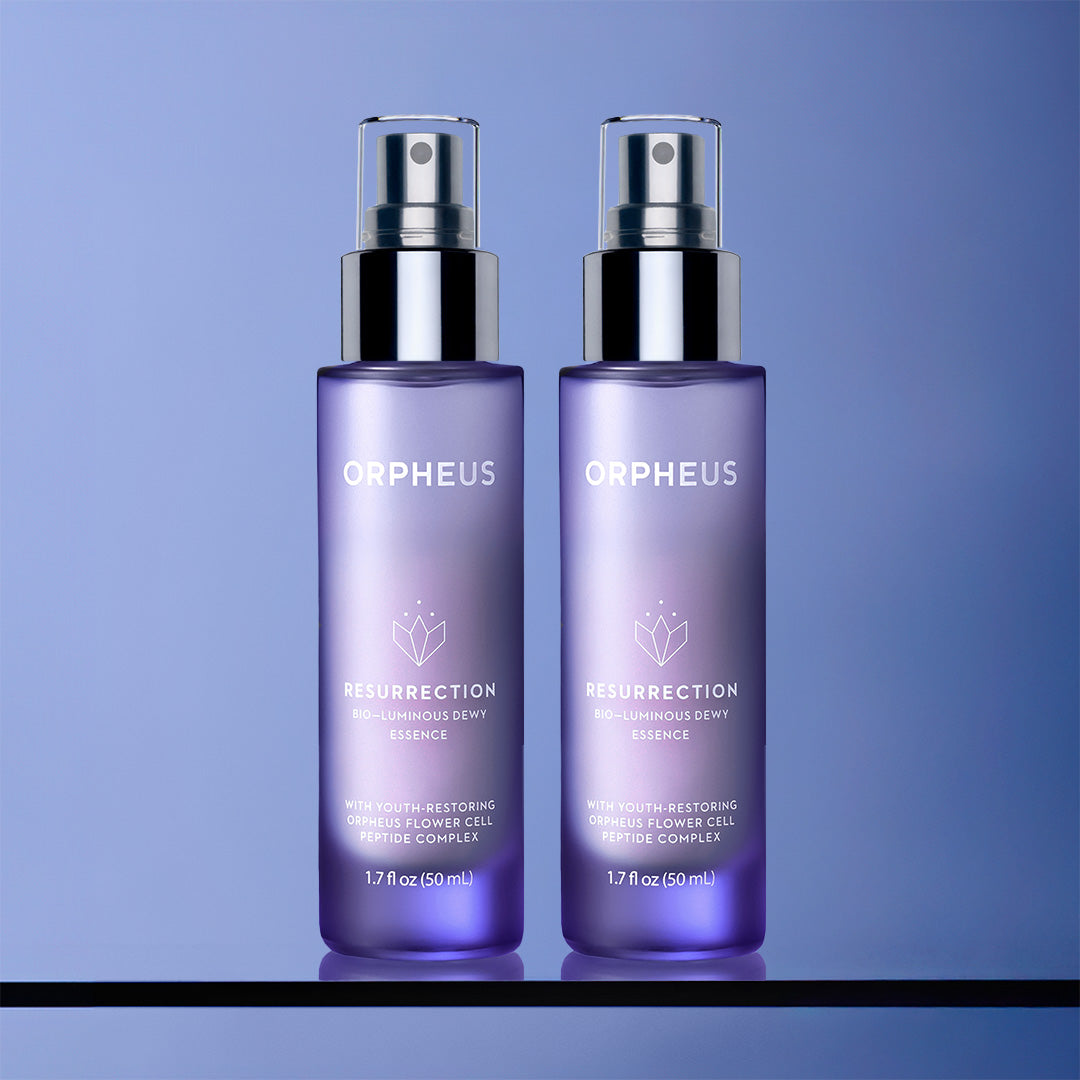
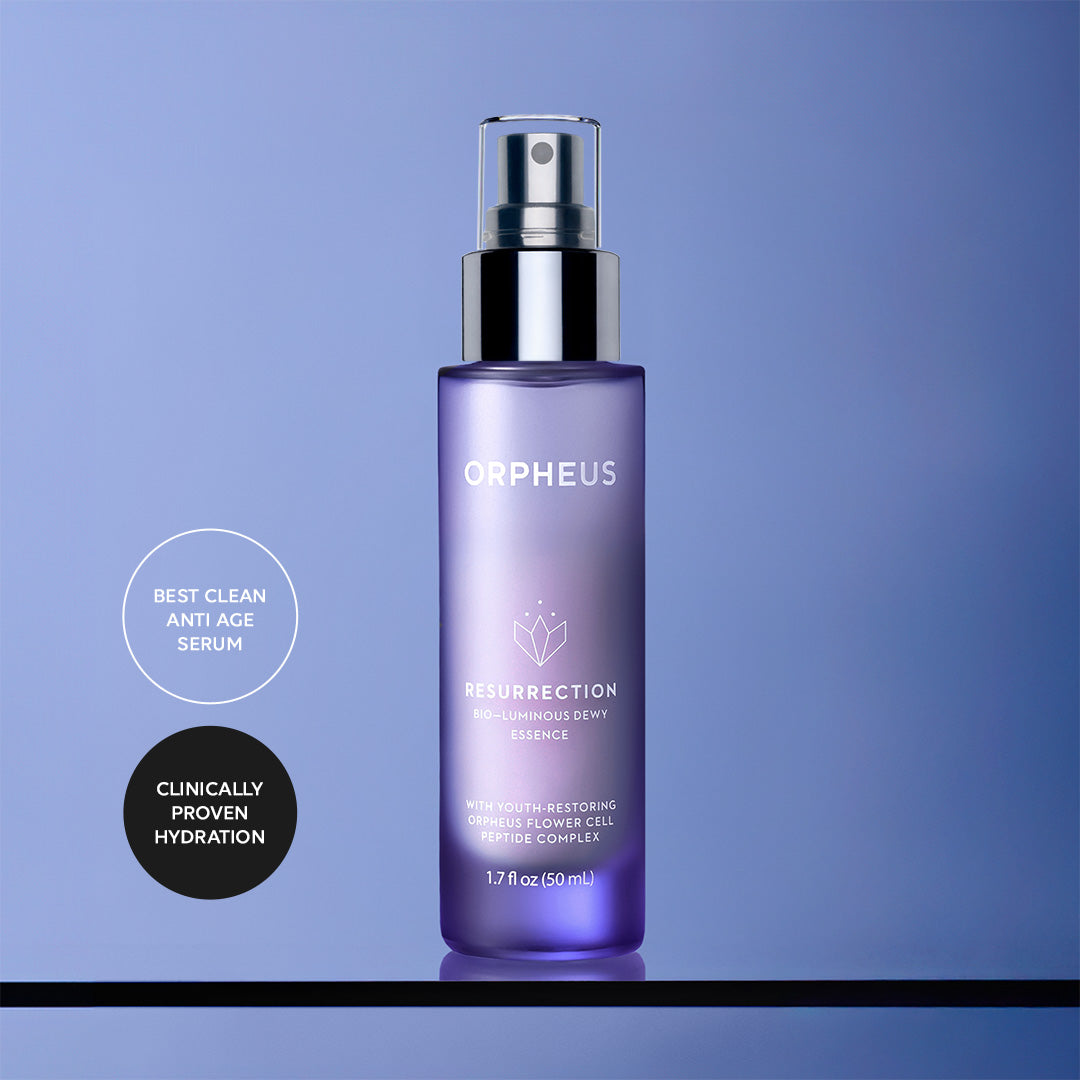
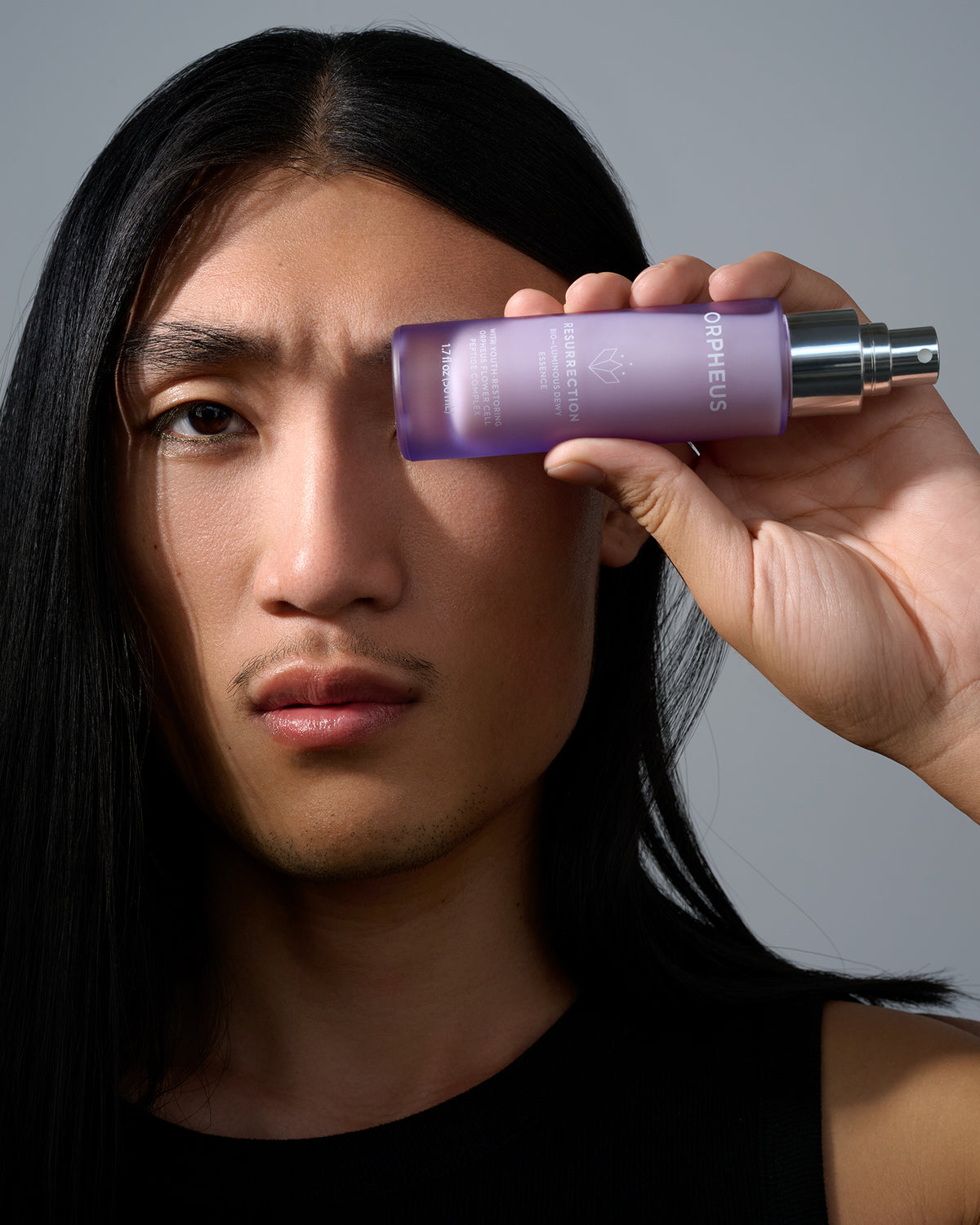
This is the logic behind Bio-Luminous Dewy Essence, a serum-in-a-mist for people who want the finish without the liturgy. 60% immediate hydration boost. 92% retained moisture after 24 hours. One pass over bare skin, or straight over makeup at 1am, and the reflectivity arrives without a single acid in sight.
At its core sits the Orpheus Flower Cell Peptide Complex®, a bioengineered blend of botanical stem cells, antioxidants and plant tripeptides drawn from a flower that survives total dehydration and revives with one drop of water. Bio-Luminous Dewy Essence borrows that trick and hands it to your face on a Tuesday.
Glass skin isn't a stack. It's a state, and skin only reaches it when you stop assaulting it.
Ready to strip it back? Shop the essence or browse the full ORPHEUS range and build the shortest routine you've ever had.
Frequently Asked Questions
Can you actually overdo the glass skin routine?
Yes, and most people do. Layering eight to twelve products, especially with acids or exfoliants in the mix, strips barrier lipids, disrupts skin's pH and triggers inflammation. The result is redness and dehydration, which is the precise opposite of a glass finish.
How many products do you really need for glass skin?
Three at most. A non-stripping cleanser, one hydrating formula that works at multiple skin depths, and SPF in the morning. Glass skin is a hydration and barrier outcome, not a step count. Our three-product ritual breaks down the order.
What are the signs you're using too many skincare products?
Stinging from products that never stung before, tightness after cleansing, new breakouts in unfamiliar places, and skin that feels dry no matter how much you apply. Those are barrier distress signals. Pull everything except hydration and repair for two weeks, then read how to rebuild a damaged barrier.
Is glass skin possible if you have a damaged barrier?
Not until the barrier is rebuilt. Compromised skin can't retain the water that creates the reflective finish, so repair comes first. Once hydration holds, the glow follows without a twelve-step campaign.
What's the fastest way to get dewy skin without a full routine?
A serum-in-a-mist. Bio-Luminous Dewy Essence delivers a 60% immediate hydration boost and holds 92% of that moisture at 24 hours, over bare skin or over makeup, with no layering and no waiting between steps.
Read more

Thick creams and bed rest won't heal your skin. Reconstruction will. The barrier-first science of healing skincare — and the formula built to finish the job.

Strength became shorthand for results, and skin paid for it. The case for gentle exfoliation, the fruit cell that resurfaces without irritation, and why your cleanser should be doing the work.